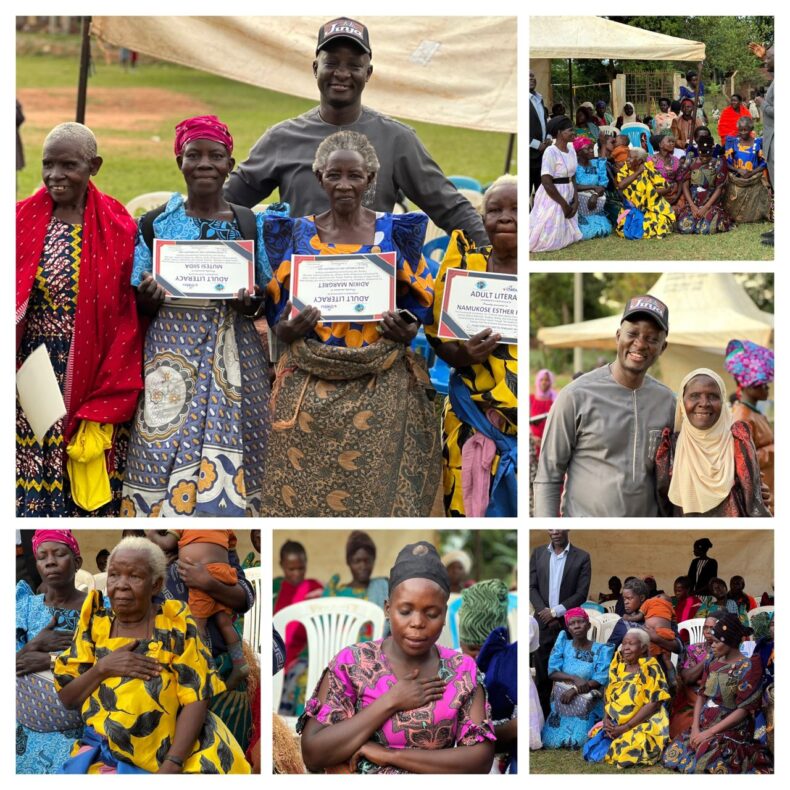
The adult literacy initiative is designed to equip non-literate adults in Uganda with practical reading, writing, numeracy, and financial skills to enhance their livelihoods.
Rationale
- High Illiteracy Rates: Millions of Ugandan adults lack basic literacy.
- Gender Disparity: Women face higher illiteracy rates than men.
- Economic Barrier: Poor literacy limits participation in modern markets.
- Marginalized Groups: Rural communities suffer the highest exclusion rates.
Target Audience & Approach
- Target Demographics: Primarily rural women, youth, and marginalized urban market vendors (e.g., in Kampala/Wakiso areas).
- Methodology: Participatory, learner-centered methods.
Key Activities
1. Contextualized Literacy & Numeracy Instruction
- Teaching the “3Rs” (Reading, wRiting, and aRithmetic) using localized materials in the learner’s dominant language (e.g., Luganda in central Uganda) or basic English.
- Developing primers centered around everyday scenarios, such as reading crop market prices, calculating profits, and understanding loan terms.
2. Financial Literacy & Business Skilling
- Training learners to track daily sales, manage household budgets, and record business expenses.
- Introducing concepts of savings groups (Village Savings and Loan Associations – VSLAs), which are highly prevalent and effective in Uganda.
3. Health, WASH, and Civic Rights Awareness
- Integrating hygiene, sanitation, and nutrition lessons into literacy materials to improve household health outcomes.
- Educating learners on their civic rights, legal protections (especially regarding Gender-Based Violence), and how to navigate local governance platforms.
4. Gender-Sensitive Scheduling & Community Support
- Scheduling flexible classes—typically in the late afternoons or evenings (e.g., 2:00 PM to 4:00 PM)—to accommodate participants’ farming or market trading hours.
- Establishing local Literacy Class Committees to manage attendance, coordinate with community leaders, and encourage retention.